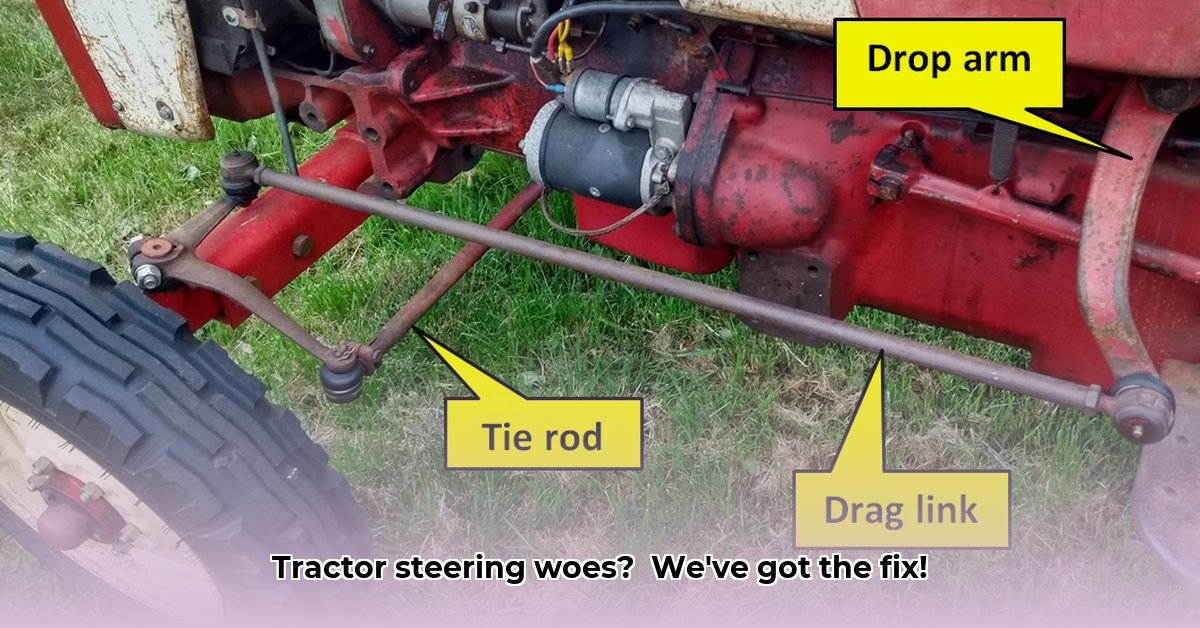
Understanding Tractor Steering Rods
Your tractor's steering rod is a critical component, transmitting steering input from the wheel to the front axle. Failure can lead to loss of control and accidents. It's essentially a mechanical linkage, typically a metal rod, sometimes incorporating joints or tie rods. The design can vary slightly across tractor models, but the fundamental function remains the same. Understanding your tractor's specific steering system is critical for both diagnosis and repair. A faulty steering rod can manifest as sluggish steering, difficulty turning, or complete steering failure. For more on tractor attachments, check out this helpful guide on small tractor attachments.
Identifying Your Tractor's Steering Rod
Locating the steering rod requires consulting your tractor's owner's manual. Generally, it's situated near the front of the tractor, between the steering gearbox and front axle. It's usually a relatively thick metal rod, often connected to tie rods that lead to the wheels. Use diagrams and photos in your manual to pinpoint its exact location. If your manual is unclear or unavailable, online forums dedicated to your tractor's make and model often have helpful photos and videos from other owners. Always prioritize safety: use jack stands to support the tractor before working underneath.
Choosing a Replacement Steering Rod: OEM vs. Aftermarket
Replacing a faulty steering rod presents a choice between Original Equipment Manufacturer (OEM) parts and aftermarket alternatives. OEM parts, produced by your tractor's manufacturer, guarantee a perfect fit and typically offer superior durability and longer warranties. However, they come at a premium price. Aftermarket options provide a cost-effective alternative but introduce variability in both quality and durability. Some aftermarket parts are well-made and offer good value, while others might compromise longevity and performance.
Here's a comparison:
| Feature | OEM Parts | Aftermarket Parts |
|---|---|---|
| Cost | Higher | Generally Lower |
| Warranty | Usually longer, manufacturer-backed | Often shorter, check carefully before buying |
| Fit | Guaranteed perfect fit | May require careful checking for compatibility |
| Durability | Typically higher | Varies greatly; read reviews to get a sense of typical lifespan |
| Ease of Install | Might need specialized tools | Often marketed as easier to install |
Carefully weigh the cost, durability, and warranty before making a decision. For critical safety components like steering rods, many experts recommend prioritizing OEM parts.
Installing a New Steering Rod: A Step-by-Step Guide
Replacing a steering rod requires mechanical aptitude. Always consult your tractor's repair manual for precise, model-specific instructions. Safety is paramount! Before you begin, disconnect the battery’s negative terminal and securely support the front of the tractor using jack stands.
General Steps (Consult your manual for specific details):
- Disassembly: Carefully remove the old steering rod and related components. Take photos during disassembly to aid reassembly.
- Installation: Install the new steering rod, ensuring proper alignment with all connecting components. Avoid forcing any connections.
- Reassembly: Reassemble all parts in reverse order, referring to your photos and manual as needed.
- Testing: Reconnect the battery, lower the tractor, and carefully test the steering system. Ensure smooth, responsive turning.
This process might requirespecialized tools; if unsure, consult a professional mechanic.
Maintaining Your Steering Rod: Preventative Care
Regular inspection is crucial for preventing costly repairs. Inspect the rod for bends, cracks, or loose connections. If your steering rod has grease fittings, lubricate them according to your manual's recommendations. Regular lubrication extends its lifespan and reduces wear. This preventative maintenance is far more cost-effective than unexpected repairs. Think of it as a small investment in safety and operational efficiency.
Key Takeaways:
- A properly functioning steering rod is crucial for safe tractor operation.
- OEM parts offer superior quality and reliability, but at a higher cost.
- Regular maintenance and inspection prevent costly repairs and downtime.
This guide provides general information. Always consult your tractor's owner's manual for detailed instructions and safety precautions specific to your model.